
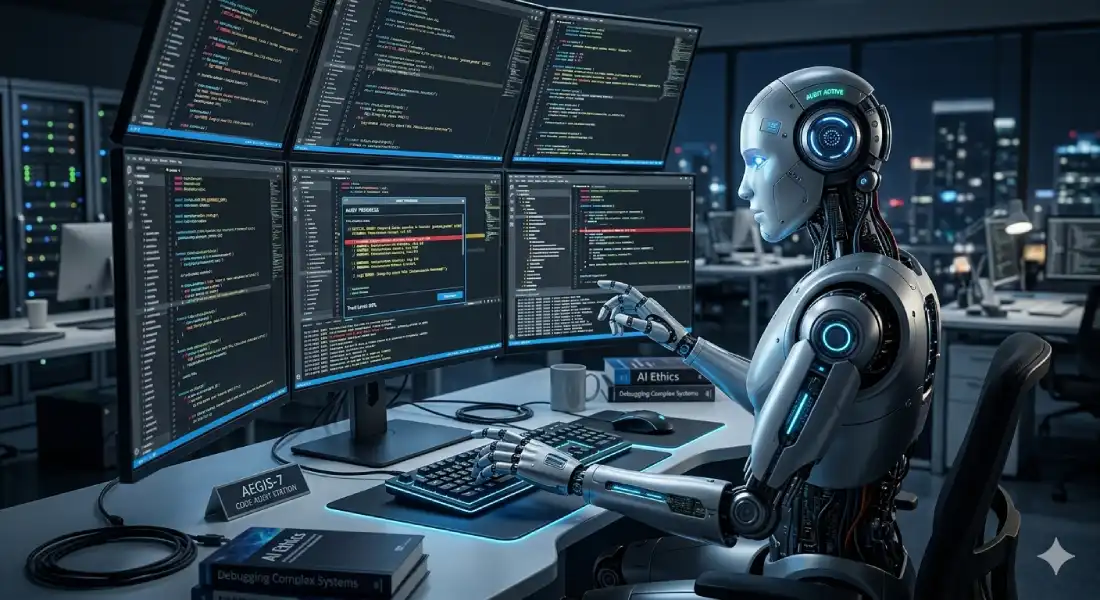
The Robot Casino Dilemma: Why AI Lacks Trust
Everyone in the online gambling world is hyping up Artificial Intelligence right now. If you listen to the tech “gurus” at any recent casino convention, they’ll make you believe that human beings are about to be completely replaced by robot casinos that run themselves, write their own code, and keep players hooked 24/7.
But behind closed doors? The real tech bosses are screaming for everyone to calm down.
In a massive reality-check interview ahead of the State of AI Adoption in iGaming 2026 report, Kimmo Mustonen—the tech chief (CTO) over at Wildz Group—dropped some serious truth bombs. His main takeaway? Building smart AI isn’t the problem anymore. The real issue is that AI is still a massive liability, and operators just don’t trust it yet.
Here is the dumbed-down breakdown of why robots aren’t running your favorite casino apps just yet.
The Hype vs. The Math: AI Has Two Very Different Brains
To understand why casinos are moving slowly, you have to understand that “AI” isn’t just one thing. Mustonen explains that casino tech is actually split into two totally different layers:
1. The Math Brain (Machine Learning)
This is the boring, unsexy stuff that casinos have been using for years. It doesn’t write poetry or make funny pictures; it just grinds numbers, calculates odds, and predicts player behavior. Wildz built 80% of their platform internally using this math because it is incredibly reliable. It’s the true engine under the hood.
2. The Chatty Brain (Large Language Models / LLMs)
This is the new, shiny AI everyone is obsessed with (like ChatGPT). It’s great at summarizing long documents, helping programmers write basic code faster, and speeding up customer service chatbots. But compared to the Math Brain, it is unpredictable and easily confused.
Casinos prefer building their own custom “Math Brains” rather than buying ready-made software off the shelf. Why? Because gambling laws change every single day. If a country suddenly updates its regulations, old data becomes completely useless. By building their own tech, companies like Wildz can instantly wipe their AI’s memory and retrain it to follow the new rules.
Behind the Screens: How AI Tracks You from Day One
When you sign up for an online casino, you aren’t just playing against a slot machine—you are walking through a hidden gauntlet of real-time algorithms. Here is exactly how Wildz uses AI during a player’s journey:
- The Moment You Sign Up: Before you even spin a wheel, multiple math models instantly judge you. They predict how much money you’ll likely spend, check if you have a gambling problem, and run instant security checks to make sure you aren’t a money launderer or a fraudster trying to game the system.
- While You Play: An automated system watches your every move. If you start changing up the games you play or spending more money, the AI instantly recalculates your profile.
- The Dynamic Lifeline: In real-time, the system throws you into custom buckets. It will automatically trigger specific bonuses or change the promotions you see based entirely on your personal habits.
Where humans still rule: Casinos draw a hard line at VIPs and sportsbooks. Big spenders still get real human account managers because a robot cannot build a relationship. And sports betting is still too chaotic and fast-moving for AI to manage solo without messing up.
The Big Win: Scaling the Business Without Hiring an Army
While player tracking sounds like sci-fi, the biggest financial wins for casinos are actually happening in the boring corporate back offices.
Take the Wildz finance department, for example. By letting AI handle incredibly tedious tasks like posting invoices and organizing massive reports from game providers, the company managed to scale up from a single brand to a massive multi-brand empire while only hiring one junior staff member in finance. In the old days, that kind of growth would have required hiring a whole floor of expensive accountants.
Software developers are also using AI daily to build code faster. But even the coders don’t fully trust their digital assistants. Wildz actually uses a funny system where one AI agent sits there and reviews the code generated by a different AI agent—and even after that double-check, a real human programmer still has to manually approve it before it goes live.
The Phantom in the Machine: Why AI Can’t Be Left Unattended
So, why not just let the AI run the whole show 24/7 while the executives sit on a beach?
Two words: AI Hallucinations. As Mustonen put it quite bluntly:
“The challenge is trust. LLMs can give very convincing answers that turn out to be wrong when you look closer.”
Because AI has a bad habit of confidently making up fake facts, Wildz strictly forbids AI from sending out automated marketing emails or brand messages without a human checking the text first. If an unhinged chatbot promises a player a fake $10,000 bonus by mistake, the casino would face catastrophic regulatory fines and massive brand damage.
The same goes for coding. While tech companies dream of “autonomous AI agents” that can find bugs and fix them in the middle of the night without human help, nobody is brave enough to try it on something critical. You might trust an AI to fix a small visual glitch on a website’s homepage, but you would have to be crazy to let an unmonitored robot touch the digital wallet where the real money is kept.
Looking Ahead: The 12-Month Roadmap Is Dead
Technology is moving so fast that standard corporate planning has gone out the window. Mustonen admitted that a normal 12-month tech roadmap is completely useless now. To prove his point, he noted that a massive technical task that AI completely failed at just a year ago can now be solved by current models flawlessly, right out of the box.
The ultimate dream for casinos is to create a system where a boss can simply text a database in plain English—like “Hey, who were our top 50 players this weekend and what did they play?”—and get an instant, flawless answer.
But until AI can guarantee 100% accuracy using live, up-to-the-second data instead of outdated training sets, humans will keep their hands firmly on the steering wheel. The tech is ready, but the trust just isn’t there yet.